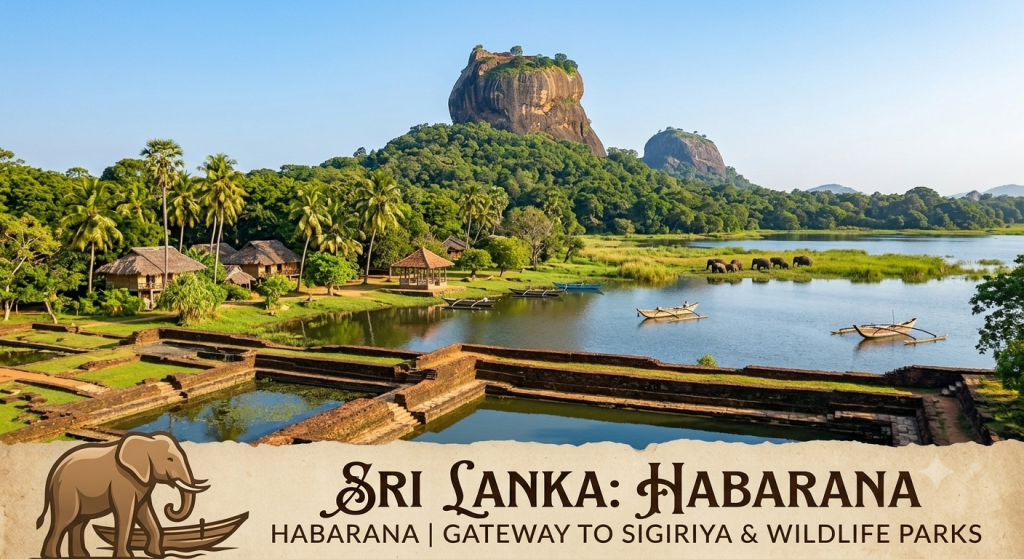
Strategic Getaway in the Central Cultural Triangle Gateway to wild encounters in Sri Lanka’s dry zone. Habarana’s rise as a vibrant tourist destination stems from a unique blend of location, heritage, wildlife and eco –tourism investments.
Habarana is not just a peaceful retreat;it’s a vital crossroads linking ancient cities.
Habarana junction, Its position at major road inersections
- A6 – Kurunegala –Trincomalee road,Nilaveli beach,( East)
- A11- Maradankadawala road/ juntion –Tirkkonadimadu road Anuradhapura (North west) – 56 km
- To polonnaruwa.(North East)- 47 km
Small regional roads connect with the enterance of Minneriya -6km alone A11 and Kudulla national park -22km via GalOya junction.
To Ritigala 16 km alone A11
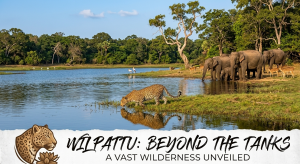
Habarana surrounded by dry mixed evergreen forest in Sri Lanka, a world of their own is an ideal hub for unforgettable wildlife adventures.
Activities (optional and seasonal)
Ii Explore Habarana village by bullock cart and traditional village lunch
iii. Enjoy an evening elephant safari at Minneriya or Kaudulla (seasonal)
- Ayurvedic spa treatment or nature trail walk
Dry zone landscape of North central province
Unlike the evergreen rainforests of south western part, dry zone forests receive less rain fall and bright sun light .this shapes a very different landscape. During dry season open woodland filters sun light easily through scattered huge trees like tamarind, wood apple, ,palu,weera, Mora,Gadu guda,Gal siyambala and Ma dan .All above trees bear seasonal fruits rich in antioxidants and medicinal properties, valued by local communities for centuries and attract the wild animals and birds.
These hardy species well developed smart natural adaptations to conserve water and survive long period of drought and intense sun.
Many dry zone trees shed their leaves during the peak dry season. By dropping leaves, the tree stops unnecessary water loss allowing it to survive until the rain return. Through water loss.
Most trees here have small, tough leaves. The bark is often rough, thick and sometimes cracked. This acts like protective armor, reducing water loss.